The Silent Struggle: Why Speaking Your Own Language Feels Taboo Among Students Today❓❓
 |
Translation:
Stuck between our mother tongue and foreign influences, we could neither become fully Englishnor stay authentically Punjabi(or entirely true to our cultural roots regardless of authenticity).
|
Lost in Translation: The Lingering Effect of Language Shame Among Immigrant Communities🌍💔
One of my close friends once joked me, "If people wanted to speak Hindi, Gujrati, Marathi or Punjabi, they should have stayed back in their own country. Why come here and still do the same stuff??"
This comment made me reflect deeply, especially since it came from someone who shares the same linguistic and cultural background as mine. It brought to light a dilemma that many immigrants and their families face daily—a subtle yet powerful divide between adapting to a new culture and holding onto our roots. 🌏
Language is more than just words; it’s the essence of who we are. It connects generations, preserves traditions, and carries the stories of our past. Yet, in a multicultural country like Australia, I’ve seen a troubling trend: children of immigrants hesitating, or even feeling embarrassed, to speak their native language. It’s not just a choice—it’s a reflection of an unspoken pressure to "fit in." 💬❤️
English proficiency is undoubtedly a powerful tool—it opens doors to education, career growth, and social integration. But does embracing English mean we must abandon our mother tongues? Why should speaking our native language feel like a badge of shame? Instead, can’t it be a source of pride? 🌐💪
My Experience: Embracing Multilingualism and the Struggle for Belonging
Whenever me and Micky visit our relatives whose kids were born and raised here, we notice that they tend to hide themselves and feel uncomfortable sitting and talking with us in our native language. It's only when we speak English and use their local slang that they seem more at ease; otherwise, they act awkwardly.
Even, as a trainer and mentor, I see this challenge daily. In my class, I’ve seen fluent English speakers confidently take the lead, even with limited subject knowledge, while highly skilled students, lacking linguistic confidence, sit silently. Over time, they feel alienated, and their self-esteem gone. 💔 One bright student, a former top scorer in their home country, shared how they felt overshadowed and hesitant to participate because of this dynamic. When I shared this experience with a colleague, I expected empathy but instead heard: “Why are they even here if they can’t speak proper English?” That remark hit hard. Is language fluency the only benchmark for belonging? 🤔
This isn’t just a classroom issue—it reflects a broader cultural challenge. 🌱✨Balancing cultural preservation with growth is not easy, but it’s necessary. After all, shouldn’t we celebrate the richness of speaking multiple languages rather than making one feel superior over the other? Let’s remind ourselves and the next generation: there’s no shame in where we come from or the languages we speak. Instead, it’s our superpower—our connection to the past and the key to a more inclusive future. 🌟✨
"Why fit in when you can belong to both worlds?" 🌍💞
The Grandparent Gap: A Lost Bond 👨👩👦💖
As an immigrant myself, I’ve seen this firsthand. Grandparents, who are the pillars of tradition and wisdom, struggle to connect with their grandchildren. Many of them, having spent most of their lives in their home country, find it challenging to learn English or adopt new slang. For some, it’s a source of amusement, but for me, it’s heartbreaking. 😔
 |
| When words fail, precious bonds fade. Let's preserve the connection between grandparents and grandkids, one language at a time. 💬❤️ |
Our grandparents’ love transcends language barriers, but when communication is limited to basic phrases or broken English, the richness of their stories and experiences is lost. 🌟 As I envision myself becoming a parent someday, this trend worries me deeply. Will my child, growing up in a world where English is glorified, miss out on the beautiful connection I shared with my grandparents? Will the laughter over shared idioms, the wisdom in their proverbs, and the warmth of our native language fade away? 😢💬
Why Is Speaking a Native Language a Source of Shame? 🤔
The reasons behind this trend are complex, but several key factors stand out:
- The Social Status of English 🌐✨In a globalized world, English has become synonymous with success. Whether it's job opportunities, academic achievement, or social acceptance, fluency in English is often seen as a marker of intelligence and modernity. Native languages, by contrast, are sometimes viewed as outdated or provincial.
- Peer Pressure and Social Media 📱📸Social media amplifies these pressures. Young people see influencers, celebrities, and even peers adopting English slang and accents, reinforcing the idea that their native language is "uncool" or "backward."
- Generational Gaps 🦯➡️👶For many immigrant families, the focus on learning English creates a gap between parents or grandparents, who are more comfortable in their native language, and children, who may feel more at ease in English.
- Fear of Judgment 😟🗣️Some children fear being judged or mocked for their accent or grammar when speaking their native language. This fear often leads to complete avoidance of the language, even among family members.
A Worldwide Challenge 🌎
This isn’t a struggle unique to Punjabi, Hindi, Gujrati, Marathi, Tamil or even the Indian subcontinent. Immigrant families worldwide face similar issues:
- In the U.S., many second-generation Latinos report losing fluency in Spanish because of societal pressure to prioritize English. 🇺🇸
- In Canada, French-speaking families in predominantly English regions often worry about their children losing touch with their linguistic roots. 🇨🇦
- Even in Australia, Indigenous/Aboriginal languages are at risk, with younger generations favoring English over their ancestral tongues. 🇦🇺
This global trend highlights the urgent need for balance. Language preservation isn’t just about speaking a certain way—it’s about honoring our history, connecting with our families, and embracing diversity. 🌈✨
The Role of Educators and Parents 👩🎓👨👨👧
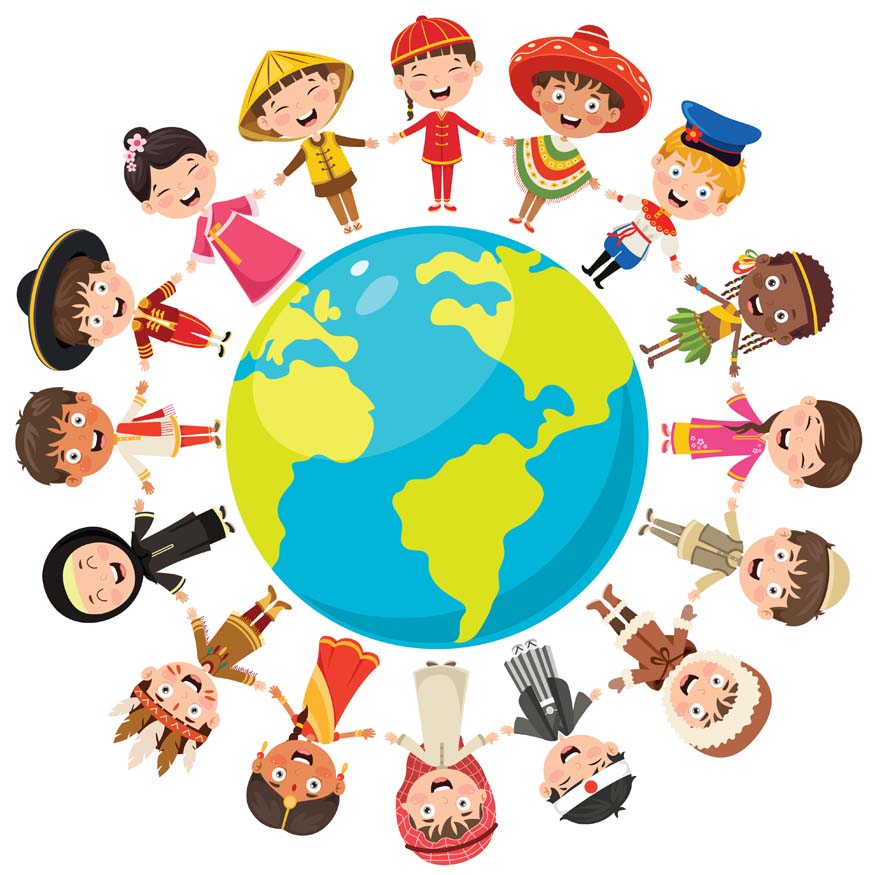
As an educator, I try to foster an environment where students feel proud of their linguistic diversity. I encourage them to view their bilingual or multilingual abilities as a strength rather than a weakness. 💪✨
- But it’s not all textbooks and serious stuff. I like to lighten things up a bit! Example: we’re deep into a lesson when I toss out a technical term in a student’s native language—like ‘shukriya’ (thank you) from my Pakistani student, ‘gracias’ (thank you) from my Colombian student, or even ‘salamat’ (thank you) from my Filipino student. And let’s not forget the Chinese ‘xièxiè’ (thank you) or the Korean ‘Kamsahamnida’ you might hear it in Korean dramas—each one a little gem! 🌟 The class bursts into laughter, and suddenly, they’re seeing language in a whole new light. It’s not just about the English terms on the board; it’s about celebrating the richness of their cultures and adding a fun twist to learning. Every day, I get to learn new words from them, and it’s like collecting little treasures that make our classroom feel more connected and lively! 🤩
- I’ve also been known to ask them to bring in some "spicy" local food from their countries during class breaks. The best way to break barriers? A good plate of food, right? 🍛
As highlighted in resources like the Department of Education and Multicultural Affairs guidelines from the Australian Government, inclusivity and cultural understanding are key elements of effective education. So, I keep the door open for every language, every culture, and every student.
For parents, the solution lies in normalization. Speak your native language at home, celebrate cultural festivals, and share stories that showcase the beauty of your heritage. Children who grow up valuing their roots are more likely to feel confident and grounded. 🌸✨
Breaking the Cycle of Shame ❌

It’s okay to learn English, to adopt new slangs, new accents and to embrace the culture of a new country. But let’s ensure it doesn’t come at the expense of our own languages. By finding a balance, we can create a world where children are fluent in English and their mother tongues—equipped to navigate both global and local contexts. 🌏❤️
Languages aren’t just words. They carry the essence of who we are, the love of our grandparents, and the dreams of our ancestors. Let’s make sure we don’t lose that in the name of fitting in. 🌟
A Thought to Ponder ✨
What are your experiences with language and identity? Share your thoughts in the comments below—let’s start a dialogue about embracing our roots while thriving in a modern world. 🌟❤️


Well said.
ReplyDeleteWell said
ReplyDeleteI appreciate your thoughts...
True words✅ people need to understand about these scenario’s as well
ReplyDeleteThank you so much everyone for your support! ✅ It’s true, these scenarios often go unnoticed, but they impact so many lives deeply.
ReplyDelete